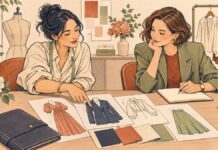
Good clothing merch gives people something they want to wear as well as a way to support a creator. A recognisable joke or logo may start the idea, but fit, fabric, artwork placement and delivery determine whether the product feels worthwhile after it arrives.
For a first release, keep the range small enough to sample and manage properly. This guide covers the decisions behind a T-shirt, sweatshirt or similar product, including production routes, a simple cost example and the distinction between selling merch and using YouTube Shopping.
Start with an audience idea that works on clothing
Look for a theme your viewers recognise without needing a long explanation. It might be an original illustration, a recurring phrase you own, or a visual motif associated with your work. Consider whether someone would still enjoy wearing it away from the screen.
Ask for useful feedback rather than only asking whether people like the idea. Show a few clear directions and ask about preferred garment type, fit, colours and likely use. A positive comment is not a confirmed order, so do not treat every enthusiastic response as a sales forecast.
Keep the first concept coherent. One strong design offered in a manageable set of sizes and colours is easier to assess than a large shop full of unrelated graphics.
Choose how the clothing will be made
| Route | Useful when | Main trade-off |
|---|---|---|
| Print on demand | You want to test demand without buying a bulk stockholding. | You have less control over available garments, individual fulfilment and some branding options. |
| A decorated batch of blanks | You want to inspect stock and choose a particular print or embroidery treatment. | You fund and manage the batch, including unsold sizes and returns. |
| Custom cut-and-sew | The garment shape, fabric or construction is central to the idea. | Development, sampling and manufacturing become a larger project. |
Printful’s explanation of print on demand describes products being made after purchase. It is one example of this model, not a recommendation that it is the right supplier for every creator. Compare the available garments, destinations, samples and service terms that matter to your audience.
If you want a custom shape rather than an existing blank, use the development approach explained in our guide to starting a clothing line.
Design for the actual garment
A graphic that looks good across a video thumbnail may be awkward on a chest. Test its scale, placement and contrast on the intended garment. Consider how it will look on the smallest and largest sizes rather than judging only one digital mock-up.
Ask the decorator for its file requirements. Print methods and embroidery need different artwork preparation, and very fine lines or small lettering may not reproduce as expected. Do not assume that exporting a larger file improves a low-resolution original.
Check commercial-use permissions for fonts, illustrations and any other third-party material. The Intellectual Property Office’s copyright guidance explains that permission needs to cover the intended use. Buying an image for one purpose does not automatically give you merchandise rights.
Order and inspect physical samples
Use the actual garment and decoration method wherever possible. Put the sample on, sit down, move in it and inspect how the graphic behaves. Check the print surface or embroidery backing, seam quality, labels and the feel of the fabric.
Measure the garment consistently before and after washing according to its care instructions. Record any noticeable change in shape, dimensions, colour or decoration. This is a practical sample check, not a substitute for formal testing where a specific performance claim requires it.
If you offer several garment colours, check how the artwork reproduces on each. A design may need adjustment when moved from a pale T-shirt to a dark one. Photograph approved samples for product pages so customers can see what they are buying.
Work out what each order actually contributes
Start with the amount you receive and deduct the costs attached to an order. Include the garment, decoration, packaging, fulfilment, payment fees and any delivery cost you absorb. Allow separately for returns, replacements, samples, design work, marketing and overheads.
The following is a fictional arithmetic example. It assumes £30 in sales revenue after any applicable tax has been accounted for, with all costs compared on the same tax basis. It is not a supplier quote or a suggested selling price.
| Example item | Amount |
|---|---|
| Revenue available from the sale | £30.00 |
| Garment and decoration | £13.00 |
| Packaging and fulfilment | £2.00 |
| Payment and platform fees | £1.20 |
| Delivery contribution paid by the creator | £3.00 |
| Remaining contribution | £10.80 |
That £10.80 is not net profit. It still has to help cover the other costs of running the release. Check the fee structure and tax treatment that apply to your own business before setting a price.
Selling merch and using YouTube Shopping are different
A creator can plan a merchandise business separately from whether their channel has access to a particular platform feature. YouTube’s official Shopping guidance sets out eligibility for promoting your own products and explains store connections and product tagging.
Check the current requirements in YouTube Studio and the official guidance rather than relying on an old subscriber threshold in a blog post. Access to Shopping does not mean YouTube manufactures the product or takes responsibility for your customer service.
The store-connection instructions also explain supported platforms and policies. Confirm that the intended retailer supports your audience’s locations before designing your launch around the feature.
Prepare the product page and fulfilment process
Provide clear photographs, garment measurements, composition, care information and an accurate description of the fit. Explain whether products are stocked, made to order or sold by pre-order, and give the relevant dispatch expectation.
Decide who answers delivery questions and how faults, exchanges and returns are handled. Test an order from checkout through the emails and packaging. A creator’s personal inbox should not be the first place a customer discovers that nobody has planned support.
For your first release, the most useful success measures include sample quality, reliable delivery, size-related questions and actual customer feedback. Use those findings to improve the next batch before adding more products.